Thursday, April 10, 2008
Wednesday, June 20, 2007
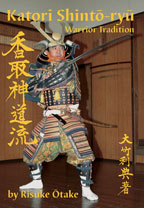
Katori Shinto Ryu -- you must read this!
|
Posted by
Simon
at
12:23 pm
0
comments
Labels: Arms and Armor, Books, Katori Shinto Ryu, Martial Arts
Tuesday, December 12, 2006
Kafka on the Shore
I've just added a new book to my list. Kafka on the Shore is a contemporary novel with strong elements of myth and Campbell's heroic voyage. A marvellously subtle piece that has Western structure, but Japanese sensibilities. This is the first Haruki Murakami novel I've read, but I'll certainly be getting my hands on more of his work. His writing has a quirkiness that blew through me like a breeze.
Murakami is Japan's Franz Kafka, but with an ease and optimism all his own: Kafka on the Shore is an existential 'whodunnit', a tale which questions our perceptions of what is real and what isn't, our relationships with the present and the past and what it means to be alive. It's full of tangents and asides, wonderful digressions onto topics as diverse as music, film and philosophy--Murakami is apparently fond of music, and musical motifs feature pretty heavily in all his works; in fact, his website list all the music referred to in his writings, which probably says more about him than any blurb I could write--but everything remains connected and relevant. Reading it felt like solving a riddle or traversing a maze; every corner seems richly complex and yet undeniably part of a whole.
Get it and read it, and fall into the world of the boy named 'Crow'.
Posted by
Simon
at
9:32 pm
0
comments
Labels: Books, Philosophy
Wednesday, November 08, 2006
Hizakurige
My son and I went for a bike ride today, and I took the opportunity to dash into the local second-hand book store. I purchased several books, pleased with my finds, but I glimpsed something special on the way out: a Tuttle first edition of Hizakurige (膝 栗毛), Ikku Jippensha's (十返舎一九, 1765-1831) classic comedy. It is, ostensibly, a novel about the adventures of two misfits, Yajirobei (彌次郎兵衛) and Kitahachi (喜多八), as they travel on the road from Edo to Kyoto. But it is really a travelogue, composed by Jippensha between 1802 and 1809 as a serial. Thomas Satchell first translated Hizakurige in 1929 as Shank's Mare, and that genuine first edition is apparently quite valuable. As far as I can tell, the 1960 Tuttle edition I now hold, essentially a reprint of Satchell's original translation, is itself quite a find; Amazon reports only three used copies for sale.
I was initially drawn to the book purely by its cover: a wood block print by one M. Kuwata (a Japanese woodblock artist from the 1950s). I was already tempted by the promise of something simultaneously new and antiquarian, but I was sold (or, rather, the book was) when I flipped open the cover to find that this edition was accompanied by the little-known fifth version of Hiroshige's The Fifty-three Stages of the Tokaido. The fifty-five full-colour prints (fifty-three stages plus the prologue and epilogue prints) are sprinkled throughout the book. I stood in the bookshop momentarily stunned. In my hand I held two wonders in one volume: a tale of old Japan I'd not read, and a set of nostalgic woodblock prints, admittedly small, by Hiroshige.
As to Jippensha, he was the son of a minor official and worked in administrative posts himself, at least until he turned to literature to earn his livelihood. Apparently, he had little patience for hypocrisy or pomposity, hating priests and contemptuous of swaggering samurai. One wonders how much of the humour in Hizakurige disguises a more sober social commentary. Perhaps ironically, he is buried in the grounds of the Zenryuji, at Asakusa, Tokyo; how it must grate on his spirit. Three years after his death relatives and friends raised a monument to him, with an inscription and a poem. The poem reads:
Oh, give me peace and rest at last!
The companion inscription is particularly apt, and I quote one part:
Well, Mr Jippensha, I don't have any sake, but I have your book, and methinks it will suffice. Kampai!
Posted by
Simon
at
8:30 pm
0
comments
What's in a name?
The Bamboo Sword: Hints of kendo, perhaps? Or a derisory reference to all those who pretend at swordsmanship? Neither, actually. It's the title of a short story by Shuhei Fujisawa, printed recently in the collection "The bamboo sword and other samurai tales" by Kodansha International. Fujisawa's story inspired, at least in part, Yoshi Yamada's The Twilight Samurai, which is well worth seeing if you haven't yet seen it. In both the story and the film, the protagonist is so impoverished that he has sold the blade of his katana, replacing it with a bamboo substitute.
'Yes, alright!' you say. 'But why have you chosen it for the title of this site?'
Well, because the idea of a bamboo sword appeals to me. In Yamada's The Twilight Samurai, Seibei is a modest character, contented not by his status as a warrior but by the joy he finds in his two daughters. The bamboo sword symbolises his dedication--a sacrifice made for the love of children--and also his humility, a virtue I respect and aspire to, even if Nietzsche did label it the refuge of the weak. In both Fujisawa's short story and Yamada's film, the bamboo sword is not the handicap one might expect: Seibei is a warrior, and a warrior is not defined by the weapon he wields, but by the mind with which he wields it. In fact, the faux sword is actually a strength, rendering Seibei's opponent Yogo reckless and falsely confident.
One night not too long past, while sharing a meal, my sensei asked me to consider a koan: what is a swordsman without a sword? I hesitated, not wanting to embarass myself. But, while the image of Seibei didn't immediately arise, I like to think he had some hand in prodding the answer from my subconscious. The Bamboo Sword is a nod, then, to Seibei; I hope it does him justice.
Posted by
Simon
at
8:13 pm
1 comments
Labels: Books, Film, Martial Arts, Philosophy